
Why fashion IP has become one of the industry’s most valuable growth engines.
The fashion industry is experiencing a paradigm shift due to the rapid rise of apparel brand licensing to drive broader appeal and additional revenue streams. Brands, entertainment companies, celebrities, and pop-culture icons are increasingly extending their intellectual property (IP) into fashion. What was once a side revenue stream has evolved into a core strategy for brand expansion and consumer engagement.
At the same time, the operational complexity behind fashion brand licensing has expanded dramatically. Modern fashion businesses involve multiple licensees, global markets, fast-moving product cycles, and enormous volumes of SKUs. Managing these ever-evolving factors requires a more sophisticated system than manual processes and spreadsheets. A modern licensing solution has become a fundamental part of the technology stack for fashion and apparel licensees and licensors. It enables brands and manufacturers to collaborate efficiently while protecting their respective businesses.
Transitioning from Physical Product to Intellectual Property: Types of Fashion Brand Licensing
Historically, apparel companies were product-centric businesses. Their success depended on the garments they designed, manufactured, and distributed through their own channels. That model has expanded into something much larger: a brand-driven ecosystem powered by intellectual property, and it shows up in several forms. Examples include:
Trademark and brand licensing
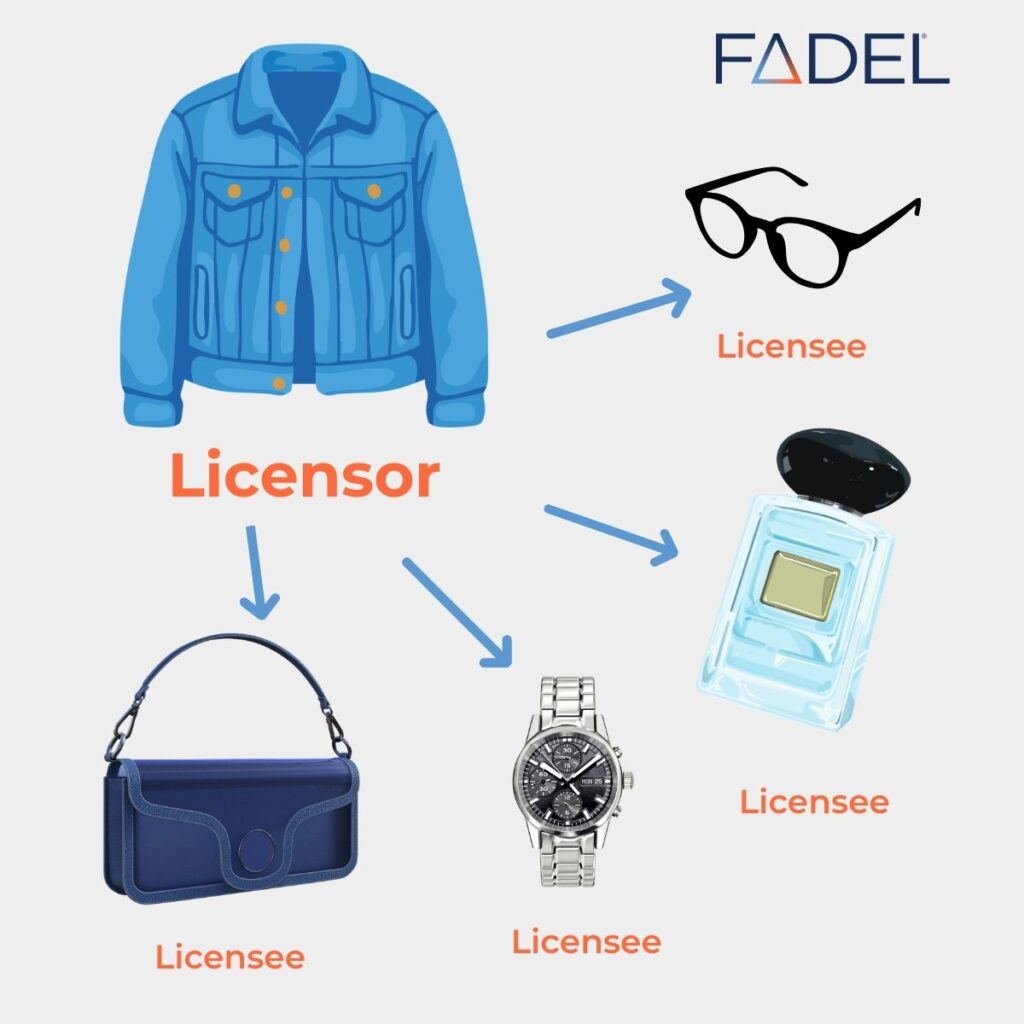
Carhartt licenses the manufacture and marketing of certain products, for example, footwear, medical scrubs, accessories, and pet products, to other companies. This allows them to broaden their product lines to new markets and demographics without compromising their core competency of durable, functional workwear.
Similarly, luxury brands like Gucci, Ralph Lauren, and Calvin Klein use licensing for non-core categories like eyewear, outerwear, and fragrances.
Character and entertainment licensing
Marvel and Disney primarily license out apparel manufacturing to third-party partners through their Disney Consumer Products division. Entertainment licensing for apparel is the bread and butter for many licensees, allowing them to use IP including characters, logos, and celebrity likenesses, while paying royalties based on the revenue generated from those products. This category overlaps into collaborations, for example, Wrangler x Stranger Things.
Designer Collaborations
Fendi x FRGMT x Pokémon developed a fashion and pop-culture collaboration, broadening appeal and elevating price points for all three brands. Designer collaborations generate high demand due to their limited, collectible nature, and have amplified multiple brands and designers, including Samuel Ross x Zara, Karl Lagerfeld x H&M, and Crocs x Swarovski.
Sports and lifestyle licensing
In 2025, Champion entered into a licensed apparel partnership with the NFL, allowing them to apply the logos of certain team franchises to t-shirts, fleeces, and other fanwear. They join prominent apparel brands, including Adidas, Nike, and Under Armour, that partner with college and major-league sports to provide uniforms, fan apparel, and lifestyle merchandise.
Heritage licensing
Although cultural institutions may still hold the smallest market share of apparel brand licensing, the category is growing. Organizations such as museums, universities, or companies with a notable heritage license out imagery, logos, and art to apparel companies. Think of your alma-mater sweatshirt, Van Gogh x Vans, or a Harley-Davidson t-shirt.
Each of these categories creates revenue streams for both the licensee and licensor. Let’s break that down.
The Licensee Advantage
For apparel designers and manufacturers, licensing unlocks the ability to connect with consumers through recognizable brands, characters, and cultural properties. It creates an emotional connection that can invoke nostalgia, communicate fandom, or signal affiliation with a community. When a clothing item is tied to a beloved brand, franchise, or creator, consumers purchase it to pridefully wear as a statement about their personality.
“Consumer affinity for brand storytelling, identity-driven purchases, and nostalgia continues to make fashion an ideal platform for extension.” The Top Global Licensors 2025, License Global
In addition, licensing accelerates market entry and product expansion for licensees, allowing them to quickly introduce collections tied to globally recognized brands without investing years into building brand awareness. Licensing has become a major driver of purchasing decisions, compelling many apparel manufacturers to ramp up licensing as part of their overall business strategy.
The Licensor Advantage
For brands, entertainment companies, and creators, fashion licensing opens up massive revenue opportunities without requiring the IP owner to stray from their core competency. Rather than manufacturing these products themselves, licensors license out their trademarks, logos, and designs to licensee partners that bring those assets to life in apparel collections.Often, these are timed to launch beside big releases, for example a blockbuster movie or new season of a popular series, amplifying the fervor. Licensing allows brands to express their identity across categories, price points, and geographies while maintaining control over the intellectual property that defines them.
7 Challenges in Fashion and Apparel Brand Licensing
While licensing unlocks tremendous growth opportunities, it also introduces operational complexity, particularly in apparel.
SKU Explosion
Apparel brand licensing operates at a scale few industries can match. Unlike categories such as toys and games or traditional consumer goods, where a single product might represent a single SKU, apparel variations multiply quickly. The same licensed property may be manufactured in many different formats, each driving a separate SKU. Consider:
- Type of garment (t-shirt, hoodie, jacket, etc.)
- Gender
- Fit
- Size ranges
- Colors
- Fabric treatments
- Retailer exclusives
These permutations quickly create enormous SKU volumes, making spreadsheet management essentially impossible. Other software platforms, for example ERP or PLM systems, are built to manage this type of SKU volume, yet they seldom have the capabilities to satisfactorily meet the demands of licensing businesses, for example royalty calculations, statement generation for licensors, and audit trails.
Apparel Brand Licensing Complexity
A single property might involve a hierarchy such as Brand → Franchise → Character → Design Variation. For example, a manufacturer licenses a property from a studio, then produces multiple designs tied to specific characters or eras of that franchise. Each variation requires its own approvals, tracking, and royalty reporting.
On top of this, licensors often require detailed product identifiers such as UPC codes to be included in royalty reporting. Historically, companies had to track these identifiers separately and manually reconcile them with product SKUs, which is both time intensive and error-prone. Modern licensing platforms solve this by connecting product identifiers directly to royalty reporting, providing unified visibility across product data and sales reporting.
Operational Bottlenecks for Licensors
For licensors managing multiple licensees across regions, each partner may operate under slightly different contract terms, approval workflows, royalty structures, deduction rules, and exclusivity agreements. Without centralized systems, licensors struggle to maintain visibility across their licensee ecosystem, leading to delays, inconsistencies, collisions, and compliance risks.
The Micro-Drop Era
Fashion cycles are accelerating. Micro-drops, capsule collections, influencer collaborations, and social-first product launches have compressed traditional product timelines. Whereas collections used to be seasonal, they’re becoming continuous. Brands now launch limited-run products tied to cultural moments, trending memes, or social media momentum.
These micro-drops drive excitement and consumer demand, but they also place immense pressure on licensing operations. Shorter timelines require rapid coordination across multiple partners, introducing new layers of risk for both licensors and licensees. Traditional licensing workflows struggle to keep up with this level of speed.
Shorter Approval Windows
Fashion brand protection begins with product approvals. Licensors must review and approve product designs to ensure they align with the brand’s identity, quality standards, and messaging. Approvals involve reviewing design assets, product samples, and packaging details. At small scale, approvals can be handled through email and spreadsheets. But when hundreds or thousands of product variations are involved and collections are launching simultaneously, manual approval processes can create delays and inconsistencies.
Centralized product approval systems streamline the process by managing design submissions in one place; tracking approval history; standardizing approval workflows; and ensuring brand guidelines are consistently applied. This not only accelerates time-to-market, it reduces brand risk.
Overlapping Collections
Multiple collections can create confusion around rights ownership, exclusivity agreements, retail channel restrictions, and royalty calculations. For example, certain retailers may have exclusive rights to specific products or designs. A licensee might be allowed to sell to one retailer but restricted from selling to another, or they may have an agreement to sell in one territory but not another. Tracking these rules across dozens of collections requires structured systems.
Complex Royalty Structures
Modern licensing deals frequently involve complex financial arrangements. These can include caps on deductions, such as tariffs, discounts, or damaged goods; minimum guarantees; profit-sharing agreements; and advances. For example, a licensee may need to pay royalties to both a studio and a creator involved in a property collaboration and each commands a different royalty rate and structure. Managing multiple payees while calculating deductions and revenue shares becomes difficult without specialized systems.
Managing Fashion IP With Licensing Technology
Brands that understand that owned or licensed intellectual property is a strategic asset are positioned for enormous growth. Licensing is no longer an ancillary activity, it is core to expanding brand reach, engaging fans, and building cultural relevance. Yet to manage these growing licensing operations, brands and manufacturers require licensing technology. Product volumes, complex royalty structures, global partner networks, and increasingly fast product cycles can no longer be managed using manual processes or cobbled-together technology workarounds.
Unified platforms like FADEL IPM Suite and LicenSee by FADEL provide visibility across rights, partners, and products, allowing licensors to protect their brands while enabling licensees to scale production efficiently.
In 2026 and beyond, licensing technology will emerge as the new fabric that holds the fashion ecosystem together.