
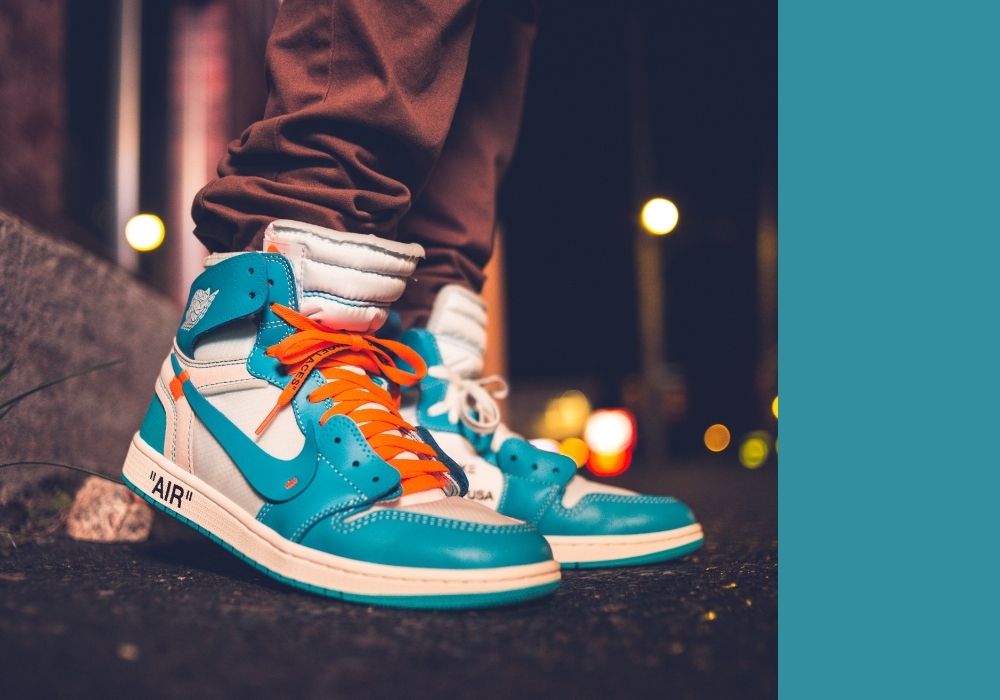
Apparel and footwear have evolved far beyond simply clothing us. Today, what we wear has become an expression of identity, community, and fandom.
A T-shirt from your favorite band. A jersey representing the team you have followed since childhood. A limited-edition sneaker collaboration from an up-and-coming designer. Each says something about who you are, what you care about, and the communities you identify with.
Sometimes, even the product itself becomes a canvas for that identity. For example, with brands like Crocs, purchasing a pair of shoes is merely the first step for many consumers. Jibbitz™ charms allow wearers to continually customize their shoes around their interests, personality, and fandoms. From entertainment characters and sports properties to food brands and cultural icons, licensed IP becomes part of the consumer’s personal expression.
This is one reason licensing and collaborations have become such a powerful part of modern apparel and footwear.
They allow brands to continually tell new stories, tap into existing fandoms, enter new communities, and create products that feel culturally relevant at a moment when consumer attention moves faster than ever.
The Collab Has Become a Cultural Shortcut: Why Footwear Brands Use Licensing Partnerships
Footwear sits at an unusual intersection of fashion, sports, entertainment, music, art, and lifestyle. That makes it particularly well suited to collaboration.
A footwear company does not need to build an entirely new audience from scratch when it partners with an IP that already has a passionate following. A collaboration can bring two communities together and give both audiences a new way to participate in something they already love.
Consider the possibilities:
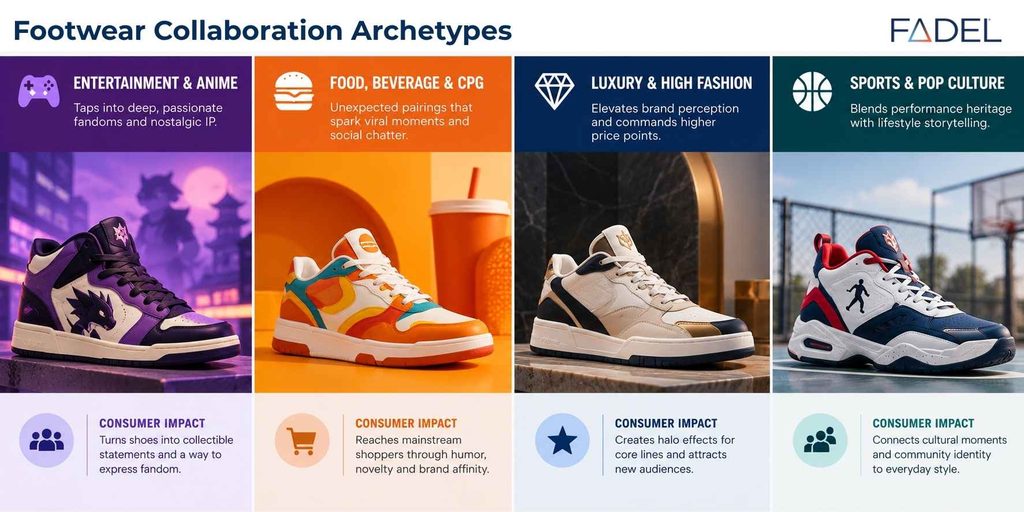
Entertainment and anime collaborations can transform characters and franchises into wearable collectibles.
Sports partnerships allow consumers to carry their team, athlete, or league affiliation beyond the stadium and into everyday fashion.
Designer and luxury collaborations can introduce a mass-market footwear brand to a completely different fashion audience while creating a halo around the broader brand.
And then there are the deliberately unexpected collaborations: footwear paired with food, beverage, CPG, gaming, or other brands that seemingly have little to do with shoes.
The unexpectedness is often precisely the point.
The right combination gives people something to talk about, photograph, share, collect, and, ultimately, wear.
From Seasonal Collections to a Constant Stream of Cultural Moments
This creates another challenge for apparel and footwear brands: staying fresh.
The traditional fashion calendar was built around relatively predictable seasonal collections. Culture today does not operate on that schedule.
A franchise can become a phenomenon almost overnight. An athlete can dominate a cultural moment. A nostalgic property can suddenly reappear across social media. A designer can develop a following long before becoming a household name. For brands, that creates both an opportunity and an expectation.
Rather than relying exclusively on a handful of major seasonal launches, licensing makes it possible to supplement core collections with collaborations, capsules, limited editions, and micro-drops tied to specific audiences and cultural moments. Scarcity can make these releases even more powerful.
A limited run creates urgency. A sell-out generates attention. Fans share the release socially. Collectors seek out products they missed. And a relatively small product launch can generate visibility far beyond its initial revenue.
In this environment, licensing becomes more than a way to put someone else’s logo or character on a product. It becomes a product innovation and audience-development strategy.
The Consumer Sees the Drop. The Brand Sees Everything Behind It.
Of course, moving faster creates complexity. To the consumer, a collaboration might look beautifully simple: two brands, one product, one great idea. Behind the scenes, it can be anything but.
Every licensed collection begins with an agreement defining what the brand can create and sell. There may be restrictions around product categories, territories, retailers, channels, launch dates, exclusivity, and marketing.
Then come the products themselves. A single footwear design can quickly multiply across:
Style × Colorway × Size × Gender × Territory × Channel
One collaboration can therefore generate hundreds or thousands of individual SKU permutations, all ultimately tied back to contractual rights and financial obligations.
Before those products reach consumers, the licensor may need to approve concepts, artwork, packaging, marketing materials, samples, or 3D product renders.
Once products begin selling, another set of requirements kicks in: royalty rates, minimum guarantees, deductions, sales reporting, multiple rights holders, and potentially different financial terms across products and markets.
That makes speed difficult when agreements live in one place, product information somewhere else, approvals happen through email, and royalties are calculated through spreadsheets.
Licensing Agility Becomes a Competitive Advantage
This is where the operational side of licensing becomes strategically important.
If collaborations are going to move at the speed of culture, the infrastructure supporting them needs to move faster too.
Brands need to be able to move seamlessly from:
Agreement → Rights → Product & SKU → Approval → Launch → Sales → Royalty → Reporting
That means knowing what rights are available before product development begins. Connecting those rights directly to the products and SKUs being created. Routing concepts and artwork to the appropriate licensors for approval. And then connecting sales back to the correct agreements so royalties can be calculated and reported accurately.
The objective isn’t simply greater efficiency. It is greater licensing agility.
When teams can quickly understand their rights, develop products, secure approvals, and manage the financial obligations behind a collaboration, they are better positioned to respond when the next cultural opportunity appears.
Keeping the Collaboration Fresh Without Losing the Brand
There is also a balance to strike. The best collaborations don’t simply paste one brand onto another. They find the intersection between two identities.
For footwear companies in particular, the underlying product often remains recognizable. The silhouette, materials, design language, or performance characteristics still belong to the footwear brand, while the licensed property gives consumers a new interpretation of it.
That protects the core brand while continuously creating reasons for consumers to come back. It also means the success of a collaboration should not necessarily be judged on unit sales alone.
A collaboration might introduce the brand to a new demographic. Generate disproportionate social engagement. Create earned media. Bring dormant consumers back to the brand. Elevate perception of the core product line. Or establish a relationship with a community the brand wants to cultivate over time.
The bigger question becomes:
What did this collaboration allow the brand to do that it could not have done as effectively on its own?
Powering the Business Behind the Collab with FADEL IPM Suite
As licensing becomes a more dynamic part of apparel and footwear strategy, brands need an operational foundation that can keep pace with the volume and speed of collaborations.
FADEL IPM Suite connects the business of licensing across agreements, rights, products, SKUs, approvals, sales, royalties, and finance, providing a single source of truth throughout the licensing lifecycle.
For apparel and footwear companies, that means being able to:
- Centralize Agreements & Rights – Manage licensing agreements, rights, restrictions, obligations, territories, channels, and exclusivity in one place.
- Connect Rights to Products & SKUs – Link contractual rights directly to styles, products, colorways, and SKUs to help ensure every launch stays within the terms of the agreement.
- Streamline Product Approvals – Manage concepts, artwork, packaging, samples, and other approval workflows with licensors while keeping product development moving.
- Automate Royalty Operations – Ingest sales, calculate royalties, track minimum guarantees and recoupments, and generate royalty statements.
- Connect Licensing & Finance – Integrate licensing activity with ERP and financial processes, including accruals, invoicing, payments, and accounting.
The result is a connected licensing operation that can support everything from major multi-year partnerships to fast-moving capsules and micro-drops.
When the next collaboration opportunity emerges, the goal shouldn’t be for operational complexity to determine how quickly the brand can respond. IPM Suite helps apparel and footwear companies build the licensing infrastructure needed to move at the speed of culture.
Accelerating Licensing with AIVA AI
Layered across FADEL’s licensing solutions, AIVA brings AI into the workflows where licensing teams can put it to practical use.
AIVA can help teams ingest and understand contracts faster, surface licensing and royalty insights, and accelerate product approvals by reviewing submissions against brand guidelines.
For apparel and footwear companies managing a growing volume of collaborations, that means AI can help teams:
- Accelerate Contract Ingestion – Extract and structure key terms from licensing agreements.
- Access Contract Intelligence – Ask questions about agreements and quickly surface relevant rights and obligations.
- Speed Product Approvals – Review licensed products against brand guidelines and flag potential compliance issues.
- Uncover Business Insights – Analyze licensing and royalty data to identify trends, performance issues, and opportunities.
As collaboration cycles get shorter and product volumes grow, AI can help licensing teams spend less time searching, reviewing, and processing information and more time acting on it.
Together, IPM Suite provides the connected licensing foundation, while AIVA helps teams move through the licensing lifecycle with greater speed and intelligence.
From Merchandise to a Cultural Engine
In 2026 and beyond, the most sophisticated apparel and footwear companies will increasingly treat licensing as more than a merchandising opportunity.
It can be an engine for product innovation, storytelling, audience acquisition, fandom, and cultural relevance.
But taking advantage of that opportunity requires the operational foundation to support it. As collaborations become more frequent, product lines more complex, and launch cycles shorter, brands need to connect the creative excitement at the front of the process with the contracts, rights, approvals, royalties, and reporting behind it.
Because consumers may never see everything that goes into bringing a licensed collaboration to market.
They just know when they see a product that feels unmistakably like them.